Organizational memory
Companies are not short of data.
They are short of memory.
Afterglow is the light that remains after the source has gone. AfterglowAI does not keep the person. It makes the traces they leave — code, decisions, incidents, design — clear enough for the next person to understand.

The systems sit side by side.
They do not know each other.
GitHub, Slack, Jira, Notion, Grafana are all full. A pull request may come from an incident, the incident from Slack, Slack from a design written by someone who already changed teams. Six months later a new engineer sees only the last line of code.
Traditional documentation fails because the busiest people write the least. Afterglow goes the other way: it does not ask anyone to produce more knowledge. It watches artifacts that already exist, then joins them. Knowledge becomes a byproduct of the work.
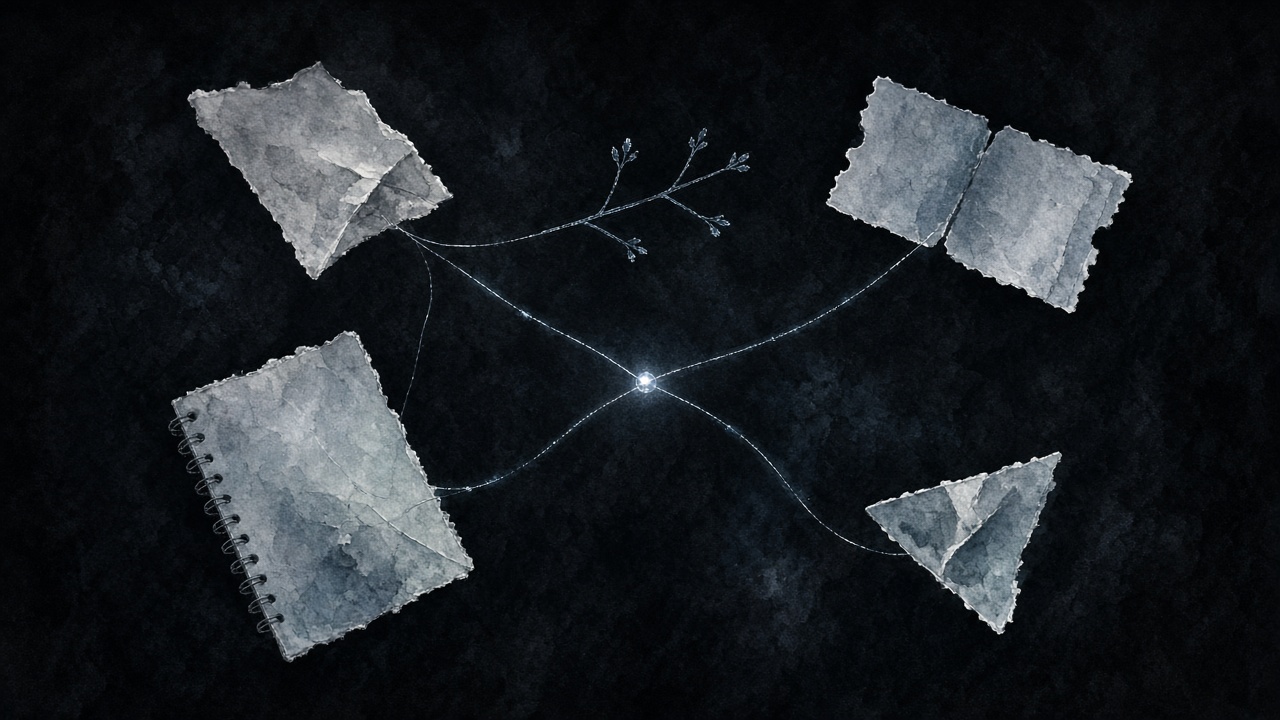
GitHub is the bell.
The rest is following the story.
-
01
Ingest
Fork, deploy, load instructions and seed knowledge. Notion and Google Docs can be pulled in. Do not dump a wiki into git.
-
02
Observer
A merged PR, a closed issue, a release — the signal that the organization actually changed. Cron only backfills. It is not the source of truth.
-
03
Decision
Not another search engine. Keep the why: hypotheses, rejected options, evidence, the PR, the outcome after deploy.
-
04
Afterglow MCP
Cursor, Claude, and ChatGPT ask the memory:
why_decision,who_knows,similar_incidents.
Give Afterglow a pull request that just merged. A senior who was in the room should read the decision record and say: yes. That is why we did it.

Memory, not surveillance.
- Watch work artifacts PRs, issues, deploys, design docs, incidents. The agent traces context only when something real has changed.
- Every conclusion has evidence Knowledge is a layer of interpretation over proof, not a story the model invented. New decisions supersede. They do not overwrite.
- Do not read the person No private prompts, no daily scorecards. When someone leaves, a counterpart does not replace them. It only keeps the capability they already showed.
One fork, one organization.
Afterglow is self-hosted. Another org forks the repo, loads their instructions, and turns on the observer. Memory lives in the store, not in a docs folder.